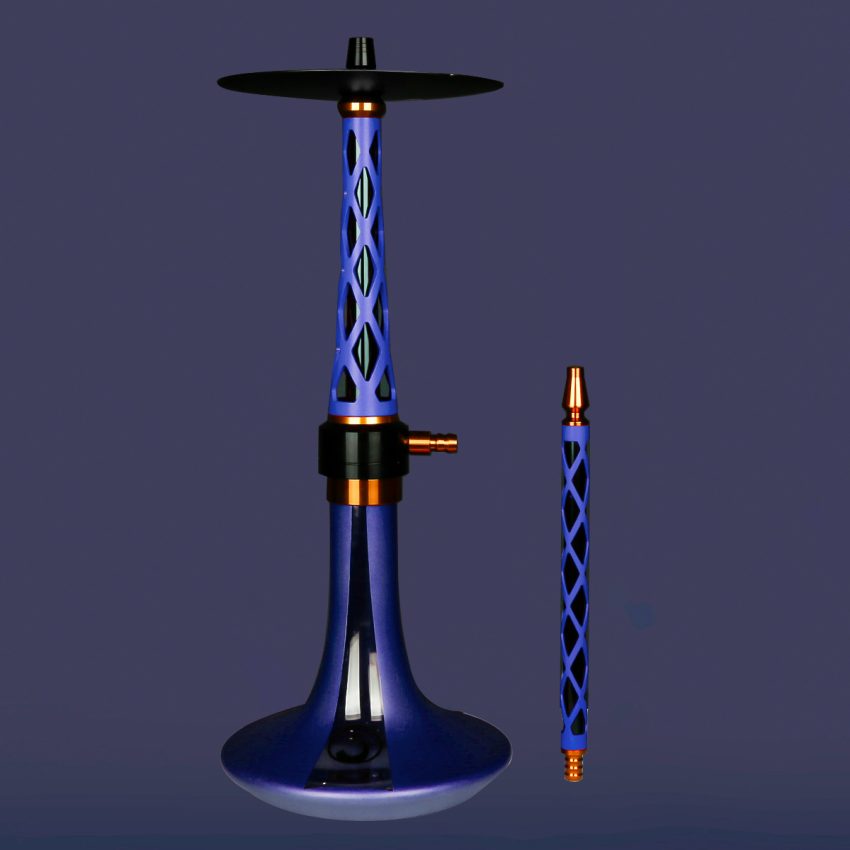
Hookah Supplier Red Flags: 10 Warning Signs Buyers Miss
October 3, 2026
Your First Hookah Import Order: A Step-by-Step Checklist
October 3, 2026
Why a Big Catalog Is a Problem, Not an Advantage
If you source hookah for a shop, a lounge, or an online store, the first thing a supplier sends is usually a hookah wholesale catalog. With 400+ designs, that catalog is not a selling point — it is a decision problem. Buy most of it and you tie up cash in styles that will not move; buy too little and you miss what customers actually want. This guide shows how to cut a large catalog to a shortlist you can defend.
We manufacture and ship internationally every week, so this is written from the supplier side. With 16 years of manufacturing and 400+ designs, we have watched the same selection mistakes repeat across every market.
How to Shortlist a Hookah Wholesale Catalog: The Filter System
Treat the catalog as a database you query, not a menu you browse. Browsing invites you to pick by taste, and taste is what gets first-time importers into trouble. Filtering forces you to eliminate designs using evidence about your market before you fall in love with anything.
The goal is a decision, not a selection
A selection is “these look good.” A decision is “these twelve styles, in these proportions, at these price bands, because my market buys X.” Only the second survives a real purchase order. So work in order: filter to narrow the field using market facts, rank to give each survivor a role, then sample to verify only the finalists. Sample first and you spend your budget learning what the filter tells you for free.
The Six Filter Dimensions and How to Judge Each One
Six criteria do most of the elimination. Apply them in this order — each is harder to reverse than the last.
Price band of your target market
Everything else must fit inside this. Work backwards from what your customers pay at retail to a landed cost you can live with — product, freight, duty, and margin. A style that looks perfect at the wrong price is a future dead SKU. Judge by your sales data or a competitor’s shelf prices, not by what feels premium.
Dominant material preference
Material drives cost and perceived quality. Some markets equate a heavy stainless body with durability and pay for it; others prefer lighter aluminum and resin with anodized color and read heavy metal as dated. Glass quality — thickness, clarity, finish — is read the same way almost everywhere. Judge by what competitors’ best-sellers use.
Size and use case: lounge versus home
A lounge pipe and a home pipe are different products with the same name. Lounges need units that survive constant handling, clean quickly, and look uniform across a floor. Home buyers need something that ships safely and photographs well. Decide which buyer you serve before you weigh size.
Design language: minimal versus traditional
The fastest-moving dimension, and the easiest to get wrong. Minimalist designs — matte finishes, single-color bodies, restrained branding — have broad momentum in Western markets and photograph well. Traditional ornate designs hold loyal segments, often older customers or specific communities. Judge by your customer base: if you cannot name who buys the ornate pieces, you do not need many.
Stock versus custom
Ready-to-ship stock gets you selling quickly, at lower commitment, with designs proven in production. Custom work — your logo, colorway, packaging — builds a range competitors cannot copy, but needs volume, lead time, and higher commitment per style. For a first order, stock tests demand at lower risk; customize once you know a style sells — review current ready-to-ship hookahs to see the trade-off.
Accessory compatibility
The pipe wins the account; accessories keep it. Bowls, hoses, gaskets, trays, and heat-management devices bring customers back on a schedule — but only if they fit what you sold. Judge each style by whether a matching accessory set exists and whether common wear parts are standard rather than proprietary. A style with no accessories is a one-time sale; one with an ecosystem is an annuity.
| Dimension | What to judge it by | What it eliminates |
|---|---|---|
| Price band | Your retail price points, worked back to landed cost | Anything that cannot hit your market’s price |
| Material preference | Competitor best-sellers; customer handling habits | Materials your market distrusts |
| Size and use case | The lounge, home, or portable buyer you serve | Formats built for the wrong venue |
| Design language | Your real customer base, not your own taste | Styles you cannot name a buyer for |
| Stock versus custom | Risk appetite and how fast you need to sell | Options that need volume you lack |
| Accessory compatibility | Whether wear parts and add-ons are standard | Dead-end SKUs with no repeat business |
Run each candidate through all six and most of the catalog disappears. What remains — usually ten to fifteen styles — is your shortlist. The question shifts from “what should I consider” to “what does each style do for me.”
Ranking the Shortlist: Traffic, Profit, and Image Tiers
Give every shortlisted style a commercial job. Three roles cover almost everything a range needs, and their proportions matter more than the pieces you pick.
Traffic styles (the entry pull)
Affordable, recognizable, fast-turning pieces that bring people in or make your range look accessible. Margins are thin, and that is fine — they earn their place by volume and by pulling buyers into the rest of the catalog.
Profit styles (the margin core)
The mid-range workhorses where you make your money: solid materials, decent glass, a finish your market reads as current. Not the cheapest, not the flashiest — which is why they sell steadily at a healthy margin. Most of your order value should sit here.
Image styles (the identity pieces)
Large, statement, high-craft pieces that define how your brand is perceived. They sell in smaller numbers at higher margins and make everything around them look better. A lounge anchors its floor with one; an online store lifts a whole page with one good photograph.
A working allocation
No ratio is universal, but for a first order a defensible start is roughly 40% of your SKU count and about half of your units in traffic styles, most of the order value in profit styles, and a small minority of SKUs — one or two — reserved for image. The split depends on your channel: a lounge-heavy buyer skews toward profit and image, while a pure e-commerce or discount buyer skews toward traffic. Treat it as a starting hypothesis and let reorder data correct it.
Matching the Same Pipe to Different Markets
The same style can be a best-seller in one market and dead stock in another, for reasons that have nothing to do with quality and everything to do with local buying habits and how the product is used.
| Market | What tends to sell | What tends to sit |
|---|---|---|
| United States | Modern minimalist pipes with matte or clear finishes, large glass bases, lounge-grade durability, and heat-management accessories | Heavily ornate traditional designs as a lead item; tiny novelty pipes with no service role |
| Germany | Well-finished, functional pipes with clean engineering, plus products that meet local expectations on materials and labeling | Overstated ornamentation; anything whose compliance story you cannot explain |
| Gulf (Saudi Arabia, UAE) | Traditional and ornate designs, rich detailing, premium presentation pieces for hospitality and gifting culture | Bare minimalism as a lead item; undersized pipes that read as cheap |
Read the pattern, not the names. The US rewards a modern, restrained look and durability; Germany rewards precision and a defensible compliance position; the Gulf rewards tradition, richness, and presence. A buyer who copies another market’s best-seller list is importing someone else’s answer to a different question.
Two cautions. These are tendencies, not rules — your customers are the final authority. And import requirements differ by country and change over time, so confirm the current rules before you commit to a purchase order. The US Harmonized Tariff Schedule is at hts.usitc.gov; EU TARIC at ec.europa.eu/taxation_customs. Verify with a customs broker before signing.
Sample Strategy: Which Pieces to Order First
Samples turn a shortlist into a decision, and discipline pays off there. Sample everything and you spend more than the insight is worth; sample the right pieces and you resolve your biggest uncertainties cheaply.
- Sample only finalists. If a style survived the six filters it deserves a sample; if it did not, no sample will save it — the problem is strategic, not tactile.
- Prioritize the uncertain styles. A sample should answer a real question — does this finish photograph well, does this mechanism survive handling.
- Cover each tier, not each style. One traffic, one profit, and one image sample tells you more than five from the same tier.
- Ask about crediting samples. Many suppliers offset sample cost against a first order; the terms are often negotiable.
- Sample stock designs first. A custom colorway adds tooling and time before you know the design sells. Test in stock form, then customize winners.
- Judge against your market, not your mood. Fill it, clean it, photograph it. Write a verdict before moving on.
Keep the round tight — a few pieces, each with a purpose. Sampling confirms a decision you have already reasoned toward; it is not a second selection round.
Six Mistakes That Sink a First Order
- Choosing what you like. Personal taste is not market evidence. Filter on data and let taste decide only between options that already passed.
- Choosing on unit price alone. The cheapest pipe is not the cheapest decision — a low price with high breakage or unusable accessories costs more than a slightly pricier style that sells through.
- Ignoring packing volume and freight. Shipping is charged on space and weight, not unit price. A large or oddly shaped style can carry freight that erases its margin, and glass-heavy designs need costlier packing. Check carton dimensions and weight first.
- Spreading too wide, too soon. A little of everything feels safe and is usually the opposite: thin quantities, no repeat volume, no clear read on what works.
- Forgetting accessories and wear parts. If a gasket or bowl cannot be replaced, the customer cannot revisit you. A range without accessory support becomes a one-off transaction.
- Assuming the catalog’s labels. “Premium,” “best-seller,” and “hot” are marketing words. Verify against the product itself — materials, weight, finish — and against your own market.
Your Style Selection Decision Table for a Hookah Wholesale Catalog
Before you place a purchase order, run the shortlist through this check. Every row needs an answer you can defend.
| Question | What a good answer looks like |
|---|---|
| Can I sell this at a price my market pays? | Yes, with a stated margin after landed cost |
| Who specifically buys this style? | A named customer type, not “people who like hookah” |
| Does it fit my channel? | Lounge, retail, or online — and it is built for that use |
| Is the material right for my market? | Matches competitor best-sellers and handling habits |
| Does it have a commercial role? | Traffic, profit, or image — and the split is intentional |
| Can the customer reorder parts and accessories? | Standard wear parts and a matching accessory set exist |
| Does it ship economically? | Carton size and weight do not erase the margin |
| Is it different enough? | It is not four near-duplicates of the same safe mid-tier pipe |
A shortlist that answers all eight rows honestly is ready to sample and order. One that fails several is a hobby, not a range.
FAQ: Shortlisting Hookah Styles for Wholesale
How many styles should a first wholesale order include?
A workable first range is typically around ten to fifteen styles — enough to cover price tiers and use cases without spreading your budget too thin. The exact number matters less than the balance: enough traffic, profit, and image pieces that your range genuinely has range. Start concentrated and expand based on reorders.
Should I start with stock or custom designs?
Start with stock. Ready-to-ship styles let you test demand quickly, at lower commitment and a lower minimum quantity. Move to custom logos, colorways, and packaging once you know which designs sell — that is when customization compounds your advantage instead of adding risk to an unproven range.
How do I decide between minimalist and traditional designs?
Let your customer base decide, not your personal preference. Minimalist finishes have broad momentum across most Western markets and photograph well; traditional ornate designs hold loyal segments and dominate where ornate presentation is part of the culture. If you serve more than one segment, carry both as separated lines rather than blending them into an average.
How many samples should I order before committing?
Sample only your finalists, and prioritize the styles you are least certain about — a sample should answer a real question. Cover each commercial tier with one piece rather than sampling five near-identical styles. Ask whether sample costs can be credited against your first order.
If you want a second opinion on which styles fit your market, reach out and we will walk through it — send your target country, channel, and price band over WhatsApp and we will point you toward the pieces most likely to turn. For terms and common sourcing questions, our hookah wholesale FAQ covers the details, and the full wholesale hookah catalog lets you compare designs side by side.