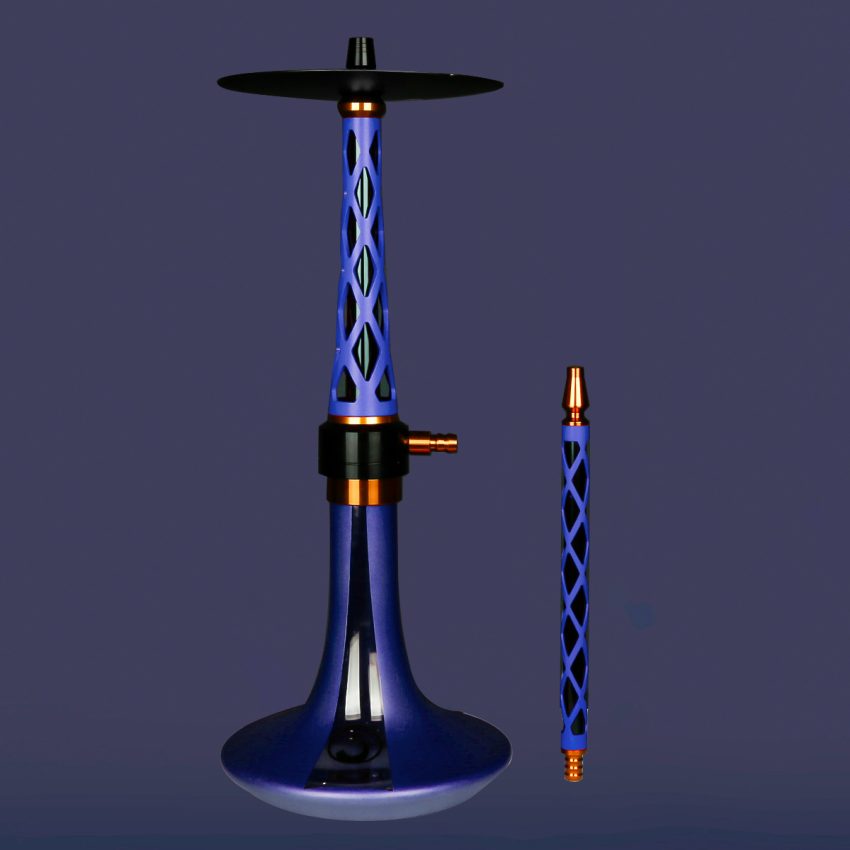
Hookah Catalog Explained: How to Shortlist Styles for Your Market
October 3, 2026
Comparing Hookah Suppliers: A Practical Scoring Template
October 3, 2026
A first hookah import order is where a new buyer either builds a reliable supply line or learns expensive lessons. The product itself is rarely the problem — what trips up most first-time importers is the sequence: the order of decisions, the documents, the money, and the timing. This guide covers the six preparations to finish before you contact anyone, the full 12-step process from inquiry to delivery, the mistakes that cost the most, and the review that makes your next order cheaper. Use the printable checklist at the end, and read every timeline band as a typical industry range — your confirmed order terms always govern.
Before You Contact Anyone: Six Preparations for a First Hookah Import Order
Most first-time importers start by emailing ten suppliers and comparing prices. That is backwards. The preparations below decide whether those quotes are even comparable — without them you are collecting numbers you cannot act on.
1. Define what you actually need
Write down three things before you open a browser: the styles you want (traditional single-hose, multi-hose, modern glass, travel-size), the quantity you can realistically sell, and your budget per unit. Vague inquiries get vague quotes, so state your market and channel too — a lounge chain and an online retailer need different SKUs. If you cannot describe your product in two sentences, a supplier cannot quote it accurately.
2. Confirm compliance for your target market
Every destination treats shisha and hookah hardware differently: some focus on tobacco regulation, some on product safety, some on labeling and packaging. You do not need to be a customs expert, but you do need to know which rules apply before you order, because compliance can change the product, the packaging, or the paperwork. Check your own country’s import authority and tariff database directly — for example the US HTS at hts.usitc.gov or the EU TARIC at ec.europa.eu/taxation_customs — and verify current requirements with your broker or the official source before you sign anything.
3. Budget for landed cost, not unit price
The unit price on a quote is one input. Your real cost is the landed cost: goods plus freight, insurance, duty, broker fees, inland delivery, and any certification or labeling. Buyers who compare unit prices alone often pick the “cheaper” supplier and pay more to the door. Build a landed-cost sheet before you negotiate so every quote lands on the same basis.
4. Build a supplier shortlist, not a single bet
Contact several manufacturers, not one. You are comparing not just price but responsiveness, willingness to answer technical questions, evidence of real production, and MOQ flexibility. A supplier that answers slowly or vaguely during the inquiry is telling you how they will behave after you pay.
5. Decide: standard design or custom
Standard stock designs are faster, cheaper, and lower risk for a first order. Custom work — your own logo, colors, or a new mold — takes longer, costs more, and rewards you only if the design sells. For a first shisha order the safer play is a mixed cart: mostly proven stock designs, plus one or two custom items to test branding. Hookah Omnis runs OEM, ODM, and private-label programs, so this can be adjusted as you learn your market.
6. Fix your target arrival date and season
Work backwards from the date you need stock on the shelf, then subtract production, booking, transit, and clearance. Hookah demand is seasonal: buying windows cluster before Ramadan for Middle Eastern lounges and before the holiday retail season in the West, and Chinese New Year shuts the supply chain for a stretch. Landing before a season beats scrambling in front of it. If your window is tight, ready-to-ship hookahs can fill the gap while custom work runs.
The 12 Steps of a First Hookah Import Order, Start to Finish
The sequence below keeps risk low and information flowing. Each step lists the key action, the blocker that most often stalls it, and a typical time band. All bands are industry ranges for planning — your confirmed schedule governs.
| Step | Key action | Common blocker | Typical time |
|---|---|---|---|
| 1. Inquiry | Send a written brief: styles, quantities, target market, packaging, arrival date | Thin briefs draw generic or slow replies; no clear requirement to quote against | Days |
| 2. Quote comparison | Normalize every quote to one Incoterm and one unit basis before comparing | Comparing FOB against DDP; overlooking MOQ breaks and tooling fees | Days to a week |
| 3. Sample confirmation | Request samples of shortlisted models; test build, weight, seals, and finish | Skipping the sample to save time; failing to seal and date an approved sample | One to a few weeks |
| 4. Commercial negotiation | Agree price, MOQ, Incoterm, payment terms, and packaging in writing | Chasing price only; leaving key terms verbal | Days to a couple of weeks |
| 5. Contract / PO | Sign a written contract or issue a PO stating specs, quantities, and dates | Relying on chat messages; ambiguous delivery dates | Days |
| 6. Deposit | Pay the agreed deposit to lock your production slot | Paying a large deposit to a supplier you have not verified | Days to clear |
| 7. Production & mid-run follow-up | Ask for dated production photos or video and a progress update | Radio silence between deposit and shipment | A few weeks |
| 8. Inspection | Arrange final QC, or request a third-party inspection report | Accepting “trust me” instead of evidence | Days |
| 9. Balance payment | Pay the balance against inspection pass and shipping documents, as agreed | Paying the balance before production is finished | Days |
| 10. Booking & shipment | Confirm booking, sailing date, and the full document set | Assuming the sailing date instead of verifying it | Days to weeks for booking, then transit |
| 11. Customs clearance & pickup | File import documents with your broker, pay duty, arrange delivery | Incomplete or mismatched documents discovered at the port | Days |
| 12. Receipt & review | Inspect goods on arrival, compare against the sealed sample, score the supplier | Skipping the review and keeping no records for order two | Days |
Notice where the risk sits. Steps 1 through 9 are mostly the factory’s to manage; steps 10 through 12 are logistics and yours. Where the handover happens depends on your trade term, so agree it explicitly and confirm who owns each link before you pay.
The Mistakes That Sink First Orders
These errors show up again and again in first-time importing. None is exotic, and each is avoidable with a little discipline up front.
- Choosing on price alone. The cheapest quote is often cheapest because something is missing: thinner glass, lighter metal, weaker cartons, or no inspection. Compare landed cost and quality evidence, not the headline number.
- Ordering without an approved sealed sample. A sample you approved verbally protects nobody. Seal a signed-and-dated sample, keep a copy, and reference it in the contract as the quality standard for the run.
- A contract with no delivery date or remedy. If the agreement states no delivery date, grace period, or remedy for a slip, you have no lever when the order runs late. Put dates and remedies in the signed document, not a chat thread.
- Paying the balance too early. Once the balance is paid, your leverage is gone. Tie it to a passed inspection and to the shipping documents, not to a promise that production is nearly done.
- Ignoring carton and master-carton specs. Box sizes, weights, and stacking limits affect your freight cost, your warehouse space, and whether goods survive transit. Confirm carton dimensions and packing method before production.
- Forgetting sea freight is more than a rate. Ocean cost includes origin and destination charges, documentation, demurrage if you are slow to clear, and insurance — not just the freight line. Budget for the whole picture or a cheap rate will surprise you.
- Not keeping your customs and shipping records. Commercial invoice, packing list, bill of lading, certificates, and duty receipts are needed for clearance, future orders, and any dispute. Archive them in one place from day one.
- Misjudging the first-order quantity. Ordering too little wastes the fixed cost of freight and clearance; ordering too much ties up cash in slow-moving stock. Start with a quantity you can realistically turn, sized to hit your supplier’s MOQ efficiently.
After Delivery: The Review That Pays for the Next Order
The order is not finished when the goods arrive — that is when you have the most information. A short, structured review turns a first order into a repeatable supply line.
Score the supplier
| Area | What to judge | Score |
|---|---|---|
| Product quality | How closely delivered goods matched the approved sample; defect rate; consistency across the carton | /5 |
| Communication | Response speed, clarity, and honesty about delays across the whole order | /5 |
| Timing | Promised versus actual dates at each milestone | /5 |
| Packaging | Carton strength, protection, labeling accuracy, arrival condition | /5 |
| Documents | Accuracy and completeness of export paperwork | /5 |
| Flexibility | Handling of small changes, rush requests, and problem-solving | /5 |
Score honestly. A supplier who is strong on product but weak on documents will cost you time on every order.
Review the real cost
Once the goods are in, you know the true landed cost, not the estimate from step three. Compare it line by line against your sheet: what did freight, duty, and inland delivery actually cost, and where did the surprises come from? Update your model with real numbers so the next quote comparison is sharper.
Write the next-order improvements
List what you will do differently. Which SKUs sold fastest and deserve a larger share? Which custom items should be dropped? What terms, packaging changes, or inspection steps should be locked in from the start? Aim for two or three concrete changes rather than a rewrite — then place order two earlier than you think you need to.
Printable Checklist: Your First Hookah Import Order, End to End
Print this page and tick each line as it is completed. If a box stays empty past its date, that is where the order is stuck.
| Stage | Checklist item | Done |
|---|---|---|
| Preparation | Styles, quantities, and budget written down | ☐ |
| Preparation | Target-market compliance checked with the official source | ☐ |
| Preparation | Landed-cost sheet built (freight, duty, broker, delivery) | ☐ |
| Preparation | Supplier shortlist verified and compared | ☐ |
| Preparation | Standard versus custom decided | ☐ |
| Preparation | Target arrival date and season fixed | ☐ |
| Steps 1–2 | Written inquiry sent; quotes normalized to one basis | ☐ |
| Step 3 | Sample received, tested, and sealed on approval | ☐ |
| Step 4 | Price, MOQ, Incoterm, payment terms, and packaging agreed | ☐ |
| Step 5 | Contract or PO signed, with specs and dates | ☐ |
| Step 6 | Deposit paid to a verified supplier | ☐ |
| Step 7 | Mid-run progress update and dated photos received | ☐ |
| Step 8 | Final inspection or third-party report passed | ☐ |
| Step 9 | Balance paid against inspection and documents | ☐ |
| Step 10 | Booking, sailing date, and documents confirmed | ☐ |
| Step 11 | Import documents filed; duty paid; delivery arranged | ☐ |
| Step 12 | Goods checked against sealed sample; supplier scored; notes kept | ☐ |
FAQ: First Hookah Import Order Questions
How long does a first hookah import order take?
Plan in bands, not a single figure. Ready-to-ship goods leave the warehouse in days to a couple of weeks; regular stock production runs a few weeks before transit; custom or new-mold work adds tooling and packaging time on top. Booking, ocean transit, and customs clearance each add their own window. The confirmed schedule on your order governs, so ask the supplier to break the date down by stage and put it in writing.
Do I really need a sample before my first order?
Yes, for anything you intend to scale. A sample lets you test build quality, weight, seals, and finish, and it gives both sides a shared quality standard. Approve it with a signature and a date, keep one sealed copy, and reference it in the contract.
What payment terms should I expect?
Most wholesale hookah suppliers work on a deposit plus a balance, often by bank transfer, with letter-of-credit terms available for larger or more established relationships. The exact split is negotiated, so the rule that matters is the trigger: the balance should be tied to a passed inspection and to shipping documents, never to a verbal assurance that production is nearly done.
How much does a first hookah import order cost?
There is no useful single number, because cost depends on models, quantity, materials, packaging, Incoterm, freight mode, and your country’s duty and clearance charges. Build a landed-cost sheet and fill it from real quotes, then compare suppliers on that basis. For a first order, keep the quantity modest and the mix close to proven designs.
Importing hookah and shisha products rewards buyers who plan the sequence and put terms in writing. Hookah Omnis has spent 16 years manufacturing water pipes for importers, distributors, and lounge chains, offering OEM, ODM, and private-label programs with MOQ-friendly terms, third-party inspection reports, and weekly international shipments. Send us your target arrival date on WhatsApp and we will tell you honestly what is possible; our hookah wholesale FAQ answers the rest.